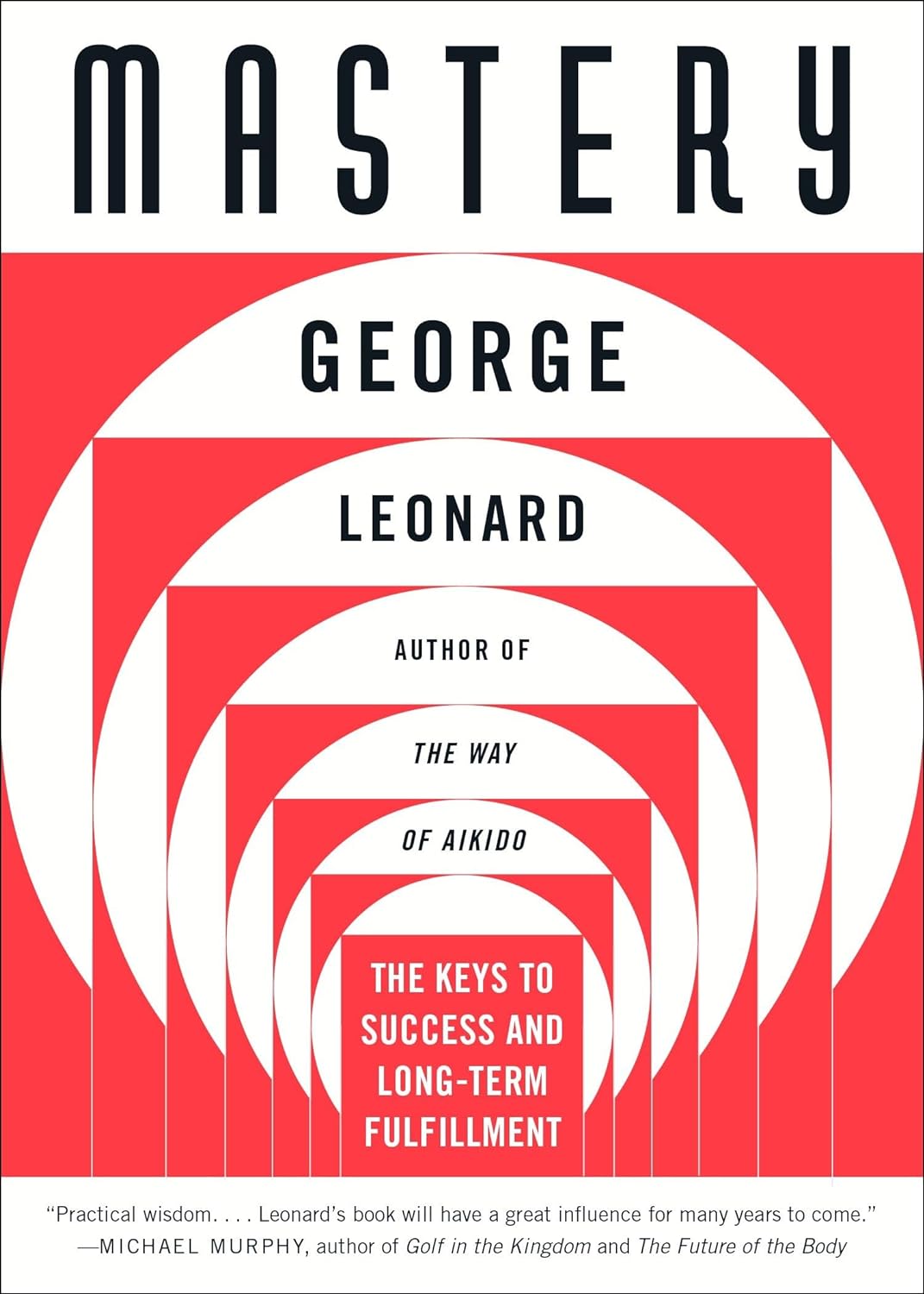
Applying Mastery to Practice
George Leonard’s Mastery reframes practice as a lifelong path. Here’s how its principles apply directly to learning piano—and how to build a sustainable, rewarding practice.
In Mastery, George Leonard presents a simple but radical idea: true mastery is not about reaching a destination, but about learning to love the process itself.
Nowhere is this more relevant than at the piano.
The Plateau Is the Path
One of Leonard’s central ideas is that progress does not happen in a straight line. Instead, it follows a pattern: a burst of improvement, followed by a long plateau, followed by another jump.
Most people quit on the plateau.
At the piano, this looks like practicing scales or a piece day after day with no obvious improvement. It feels stagnant. Boring, even.
But Leonard argues that the plateau is the practice. It’s where your nervous system is quietly wiring new patterns—timing, touch, coordination—beneath conscious awareness.
If you can learn to stay here, calmly and consistently, you unlock long-term growth.
Loving the Practice Itself
Leonard distinguishes between three types of learners:
The Dabbler – excited by novelty, but quick to quit
The Obsessive – driven by results, prone to burnout
The Master – committed to steady, lifelong practice
Piano students often cycle between dabbling and obsessing. A new piece sparks excitement, followed by frustration when progress slows.
The shift Leonard invites is subtle but powerful: fall in love with repetition.
The scale you’ve played a hundred times.
The left-hand pattern that refuses to feel natural.
The slow metronome work that no one hears.
These are not obstacles—they are the work.
Practice as Formation
The Greek concept of paideia (παιδεία) refers to the shaping of the self through disciplined practice. Leonard’s philosophy echoes this idea exactly.
Each deliberate repetition at the piano is not just improving your playing—it is forming your attention, your patience, and your ability to persist through difficulty.
Over time, this compounds.
What begins as effort becomes identity: I am someone who practices.
The Role of Measurement
One challenge of the plateau is that progress is often invisible in the moment.
This is where thoughtful tracking can help.
Not to chase numbers, but to make the invisible visible:
How many days in a row have you practiced?
How much time have you invested this week?
Which areas are receiving consistent attention?
These signals reinforce the habit of showing up—regardless of how it feels on any given day.
Mastery Is a Direction, Not a Goal
Leonard is clear: mastery is never fully attained.
There is always another level of refinement, another layer of listening, another degree of control.
At the piano, this is not discouraging—it is liberating.
You are not behind. You are on the path.
The question is not “How fast can I improve?”
It is:
Can I return to the bench tomorrow?
Bringing It Into Your Practice
Keep sessions consistent, even if they are short
Slow down enough to notice what is actually happening
Expect plateaus—and stay with them
Measure consistency, not just outcomes
Over time, something shifts.
The frustration fades. The process becomes familiar.
And practice itself becomes the reward.
That is the beginning of mastery.